National Sun Yat-sen University / Chair Professor Lin Tsung-Hsien
Pain Points Solved
Current skin detection equipment is divided into two extremes: professional equipment and simple mobile app detection software. The problems faced are that professional equipment is bulky and expensive, while simple apps cannot capture deep-layer information and are easily affected by ambient light, leading to inaccuracies. This technology provides a device that is in between, offering low cost and a certain level of precision.
Technology Introduction
Developed by the Liquid Crystal Photoelectric Laboratory led by Professor Lin Tsung-Hsien at National Sun Yat-sen University, this system uses a liquid crystal polarization component that clips onto a mobile phone camera lens. Combined with the software's AI model calculation, users can perform professional skin detection and deep-layer skin condition scanning using just their mobile phone and the clip-on device.
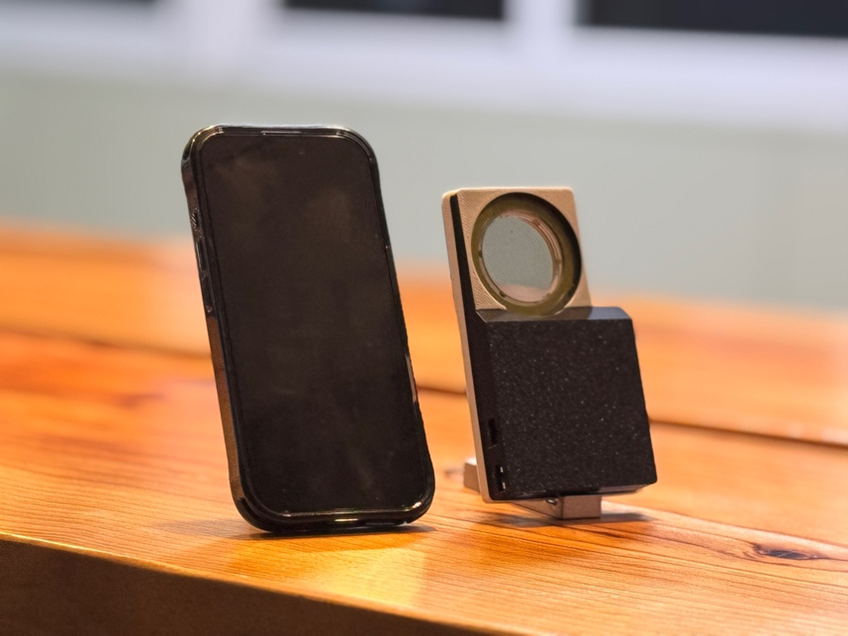
Figure 1. Clip-on Device Prototype
Application Examples
The device is currently still in the development phase and has not been formally launched. However, relevant prototype testing is currently being discussed with several dermatologists.
Related Links
None
Patent Name and Number
Industry-Academia / Tech Transfer Partner
None
Honors and Awards
Future Tech Award
Technical Contact
Industrial Liaison Office
National Sun Yat-sen University
Tel: +886 7-5250165
Email: gloria@mail.nsysu.edu.tw