
National University of Kaohsiung / Prof. Hsiu-Hua Pai
Pain Points Solved
General insect repellents (e.g., tablets, mosquito nets, etc.) require the use of testing devices to test their efficacy during the research and development process or when establishing usage regulations.
However, although commercially available insect repellent efficacy testing devices can achieve the expected function of testing efficacy, the following shortcomings have been discovered during their actual implementation:
1. The device is equipped with only one tube for testing, meaning only the experimental group is tested without a control group for comparison. This results in inaccurate experimental test results, leaving room for improvement in the overall structural design.
2. The device simply places the test agent in the agent placement area within the tube without creating an environment of air circulation inside the tube. Consequently, the experimental test results are affected by air flow conditions .
Therefore, in view of this, the inventor, upholding years of rich design, development, and actual production experience in the relevant industry, researched and improved upon existing defects to provide a mosquito repellent efficacy testing device, aiming to achieve better practical value.
Technology Introduction
The present invention relates to a mosquito repellent efficacy testing device. It mainly consists of a testing box equipped with two corresponding adjacent flow channels: a test group wind direction flow channel and a control group wind direction flow channel. A test group insect net cage and a control group insect net cage are installed at identical positions within the test group flow channel and the control group flow channel, respectively.
A fan is utilized to exhaust the air inside the testing box outward. A carbon dioxide supplier is used to uniformly deliver carbon dioxide to both the test group insect net cage and the control group insect net cage, and a heating unit is used to generate heat, simulating human exhaled carbon dioxide and body temperature.
By doing so, not only are a separate test group and control group established, but an environment with air circulation is also formed. This allows for more accurate test results to be obtained and increases the practical efficacy characteristics in its overall implementation and use.
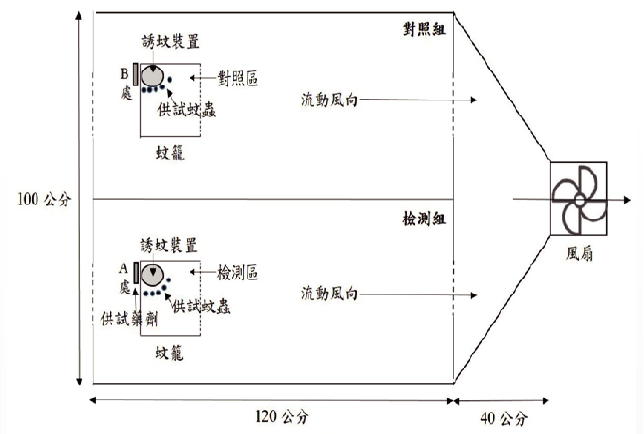
Figure 1. Schematic diagram of the Mosquito Repellent Efficacy Testing Device.
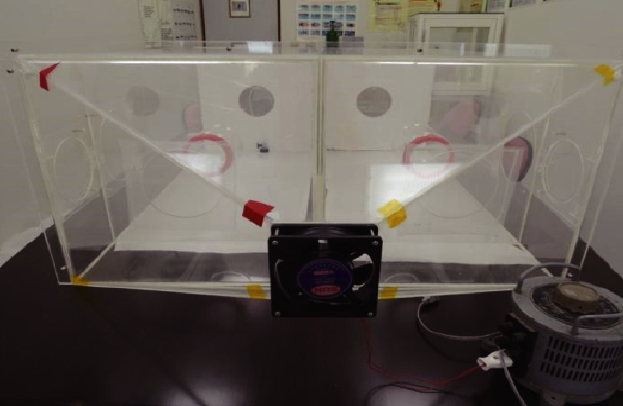
Figure 2. Mosquito Repellent Efficacy Testing Device.
Application Examples
Suitable for environmental agent efficacy testing institutions, environmental agent manufacturers, and environmental protection-related units.
Related Links
Patent Name and Number
ROC Patent, Invention No. I710318, 2020/11/21 - 2040/01/14
Industry-Academia / Tech Transfer Partner
Industry-Academia Cooperation: CHUNG TAI SING CHEMICAL INDUSTRY. CO., LTD.
Honors and Awards
None
Technical Contact
Vivian Lee, Administrative Assistant
National University of Kaohsiung
Tel: +886 7-5916639
Email: vivianlee@nuk.edu.tw