National University of Kaohsiung / Prof. Hom-Yin Lin
Pain Points Solved
The "Peptide Imprinted Transfection Complex" technology primarily proposes an innovative solution to the pain points regarding safety, efficiency, and specificity of current gene therapy vectors. Although current viral vectors possess high transfection efficiency, they carry immunogenicity and potential carcinogenic risks; non-viral vectors are safer but generally face the problem of low efficiency. This technology takes "high efficiency, low toxicity, precise controllability, simple process, and low cost" as its core advantages, effectively solving key pain points such as insufficient transfection efficiency, safety, and precision in gene therapy, possessing high potential for clinical and industrial application.
Technology Introduction
This technology utilizes peptide imprinting technology, using dCas9 peptide as a template to prepare chitosan-based magnetic nanocarriers with specific cavities. It can effectively adsorb and stably deliver dCas9-RNPs complexes, achieving a high transfection efficiency of 85–95%, while maintaining low cytotoxicity. Combined with the CRISPR/dCas9 system, it can precisely activate tumor suppressor genes (such as Trail, PAR-4, TP53), acting only on cancer cells to reduce damage to normal cells and side effects. Furthermore, the nanocarriers possess magnetic characteristics, allowing for purification, positioning, and reuse via an external magnetic field, enhancing treatment control and reducing costs.
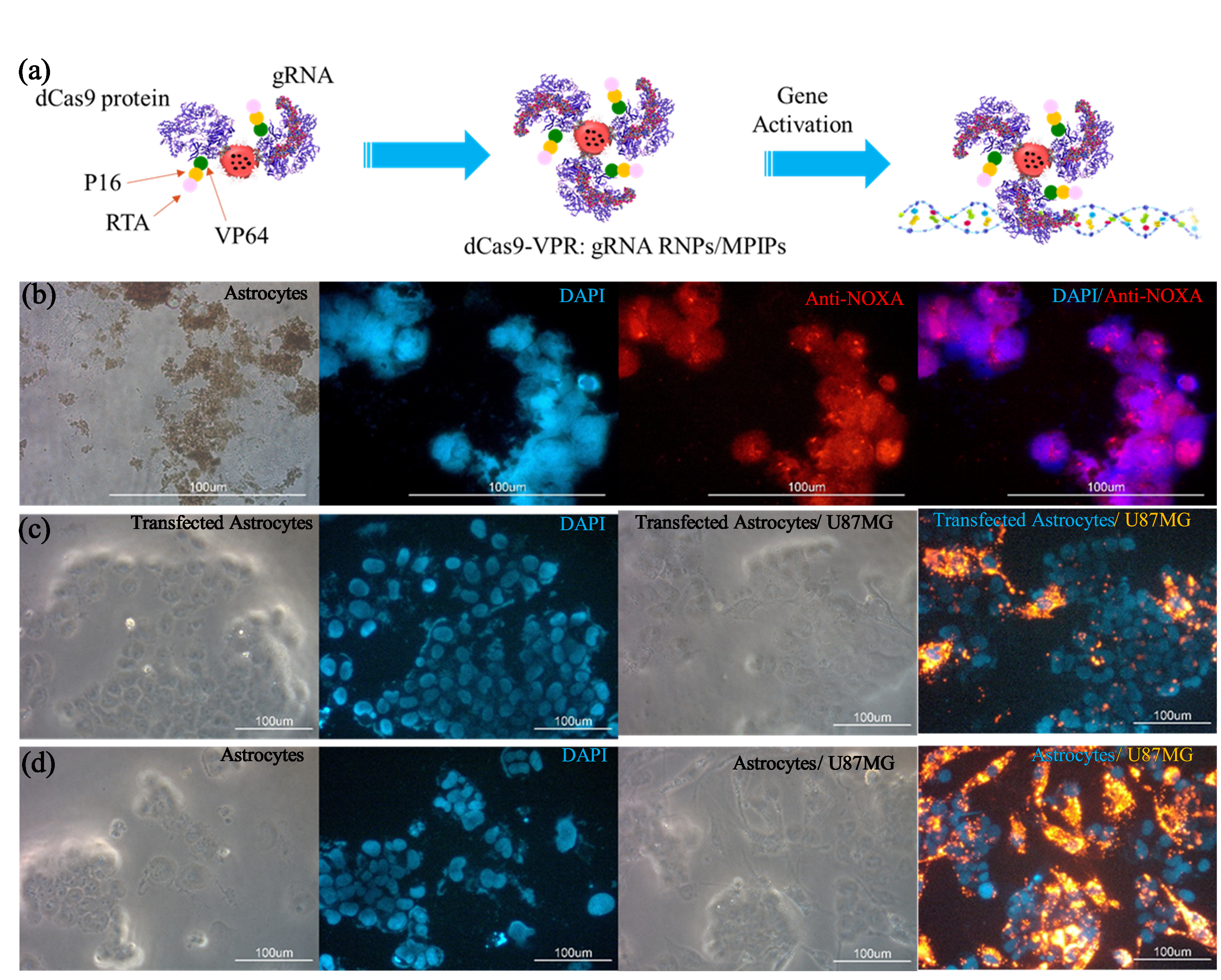
Figure 1. Applicable Process
Application Examples
Applicable Industries:
1. Precision Medicine and Cancer Treatment Industry
* Gene Therapy: Used to activate tumor suppressor genes to treat lung cancer, breast cancer, liver cancer, etc.
* Personalized Medicine: Designing exclusive gRNA for patient genotypes to achieve customized treatment.
2. Biopharmaceuticals and Drug Development
* New Drug Development: As a gene regulation platform for efficacy verification and clinical trials.
* Cell Therapy: Combined with immune cell therapy to enhance treatment effects.
3. Gene Editing and Biotechnology Industry
* CRISPR Application: Providing high-efficiency, low-toxicity non-viral vectors to replace traditional viral vectors.
* Gene Function Research: Used for gene expression regulation and disease mechanism research.
4. Nanomedical Materials and Smart Medicine
* Nanocarrier Manufacturing: Combining magnetic nanoparticles and chitosan to develop novel drug delivery systems.
* Smart Medical Platforms: Future combinations with magnetic control and IoT to achieve precise positioning and remote treatment.
Applicable Processes:
* Molecular Imprinting Process: Preparation of specific cavities to enhance adsorption capacity for dCas9-RNPs.
* Nanoparticle Preparation Technology: Chitosan coating of magnetic nanoparticles to improve biocompatibility and intracellular transport efficiency.
* Gene Vector Manufacturing: Combining with the CRISPR/dCas9 system to prepare high-transfection-efficiency non-viral vectors.
Related Links
None
Patent Name and Number
ROC Patent I884674, 2025/05/21-2044/01/02
Industry-Academia / Tech Transfer Partner
None
Honors and Awards
None
Technical Contact
Vivian Lee, Administrative Assistant
National University of Kaohsiung
Tel: +886 7-5916639
Email: vivianlee@nuk.edu.tw