
Kaohsiung Medical University / Prof. Li-Tzong Chen
Pain Points Solved
Technology Introduction
This invention presents a new strategy for generating anti-CXCR2 antibodies targeting conserved epitopes of CXCR2. Through antigen immunization and hybridoma fusion, an anti-CXCR2 antibody was selected, and its light and heavy chain sequences were obtained to develop a humanized antibody. In vitro experiments showed the antibody specifically binds to CXCR2 on pancreatic cancer cells, inhibiting downstream signaling and cell proliferation. The antibody's therapeutic effect was also verified in animal models.
Advantages include offering a novel approach for pancreatic cancer treatment, as it targets CXCR2, a molecule crucial for regulating the immune microenvironment. Given the low survival rates and poor responses to current therapies in pancreatic cancer, this anti-CXCR2 antibody combined with immunotherapy could present a potential synergistic treatment. Our results confirmed that the combination of anti-CXCR2 antibody with anti-PD-L1 suppressed pancreatic tumor growth more effectively.
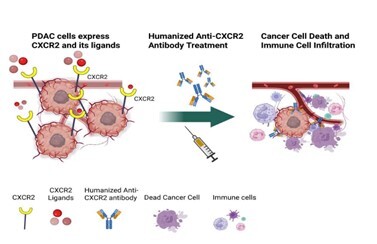
Figure 1. Anti-CXCR2 antibody induces apoptosis in pancreatic cancer cells and promotes immune cell infiltration.

Figure 2. Combination of anti-CXCR2 antibody with immunotherapy more effectively suppresses pancreatic tumor growth.
Application Examples
Related Links
None
Patent Name and Number
TW I825687
US 18/549,165
EP 22794850.2
Industry-Academia / Tech Transfer Partner
None
Honors and Awards
21st National Innovation Award-Academia & Research Innovation Award
Technical Contact
Mr. Hung, Assistant Manager
Kaohsiung Medical University
Tel: +886 7-3121101 ext. 2360
Email: R121084@kmu.edu.tw