
I-SHOU University / Prof. CHUNG-KUN YEN
Pain Points Solved
1. Traditionally, the diagnosis of Attention Deficit Hyperactivity Disorder (ADHD) relies on the DSM-V, using subjective questionnaires and scales from teachers, parents, and physicians. There is a lack of objective, scientific tools, leading to potential over-diagnosis or under-diagnosis.
2. Evaluation of treatment efficacy also relies on scales, which can be subjective based on the observer's preferences.
3. Different observers may have inconsistent evaluations of efficacy.
4. This study uses smartwatches with built-in gyroscopes and accelerometers to objectively assess ADHD symptoms, achieving scientific diagnosis.
5. Smartwatches allow for convenient, long-term data collection without interfering with children's normal activities.
6. Provides objective pre- and post-treatment tracking and comparison.
7. Advantages over traditional scales include objectivity, convenience for long-term recording, and capability for pre/post comparison.
Technology Introduction
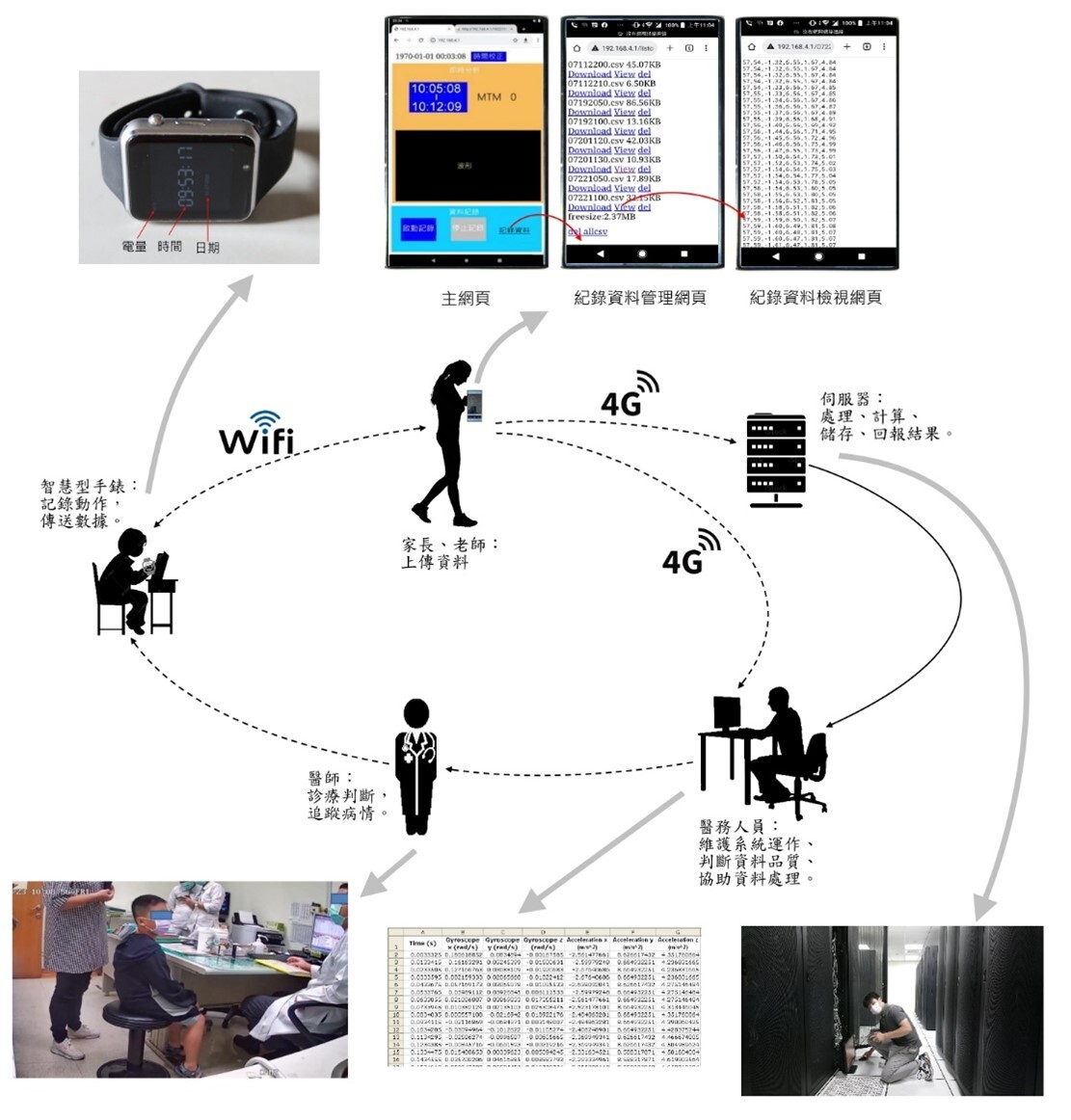
This work uses built-in gyroscope and accelerometer sensors in smartwatches to capture movement in 3D X, Y, and Z directions. Activity details are sensed and recorded on the watch. Data is transmitted via network technology to a server for analysis, with results queryable on the client side. This facilitates data transmission and storage, establishing a database for accurate diagnosis. Users upload records to the server database, allowing authorized medical personnel to monitor and analyze via the network and objectively track improvement after medication. The system is expected to be applicable to various pediatric neurological disorders.
Application Examples
To distinguish movement differences between ADHD patients and normal subjects, the study included 15 ADHD patients (11 male, 4 female) and 15 age/gender-matched classmates as a control group. Subjects wore watches with built-in gyroscopes and accelerometers on their non-dominant hands simultaneously. The study compared variance and zero-crossing rate (ZCR) of their movements. Results showed that the ADHD group had higher variance and ZCR recorded by both sensors compared to the control group. Significant differences were found in gyroscope ZCR (x, y, z axes) and variance (y-axis), and in accelerometer variance (x, y, z axes) and ZCR (z-axis).
Related Links
https://www.youtube.com/watch?v=Ru1HKcZQEhw
Patent Name and Number
ROC Patent I764558
Industry-Academia / Tech Transfer Partner
None
Honors and Awards
National Innovation Award (Clinical Innovation Award)
Technical Contact
Yu-Hui Huang, Manager
I-SHOU University
Tel: +886 7-6577711 ext. 2194
Email: yuhuihuang@isu.edu.tw