National University of Kaohsiung / Prof. Yi-Kai Chi
Pain Points Solved
The core of this technology addresses two major pain points of renewable energy in remote areas: the thermal efficiency degradation of photovoltaic (PV) panels and the inherent instability of power supply. The research team proposed an "Integrated Resource Reutilization" concept, utilizing waste heat from PV panels to preheat reactants while integrating Dish Concentrated Solar Power (Dish CSP) to provide the high temperatures necessary for reactions. This creates a robust, off-grid, multi-energy complementary system.
The primary value of this system lies in achieving a triple symbiosis of heat, electricity, and material flows. By implementing a dual-storage design with batteries and hydrogen, the system ensures continuous operation for up to 72 hours, even at night or under extreme weather conditions. Compared to traditional hydrogen production methods, this technology offers higher energy conversion efficiency and lower costs. It provides a resilient clean energy solution for islands, disaster prevention facilities, and military bases, effectively realizing the goals of energy autonomy and net-zero emissions.
Technology Introduction
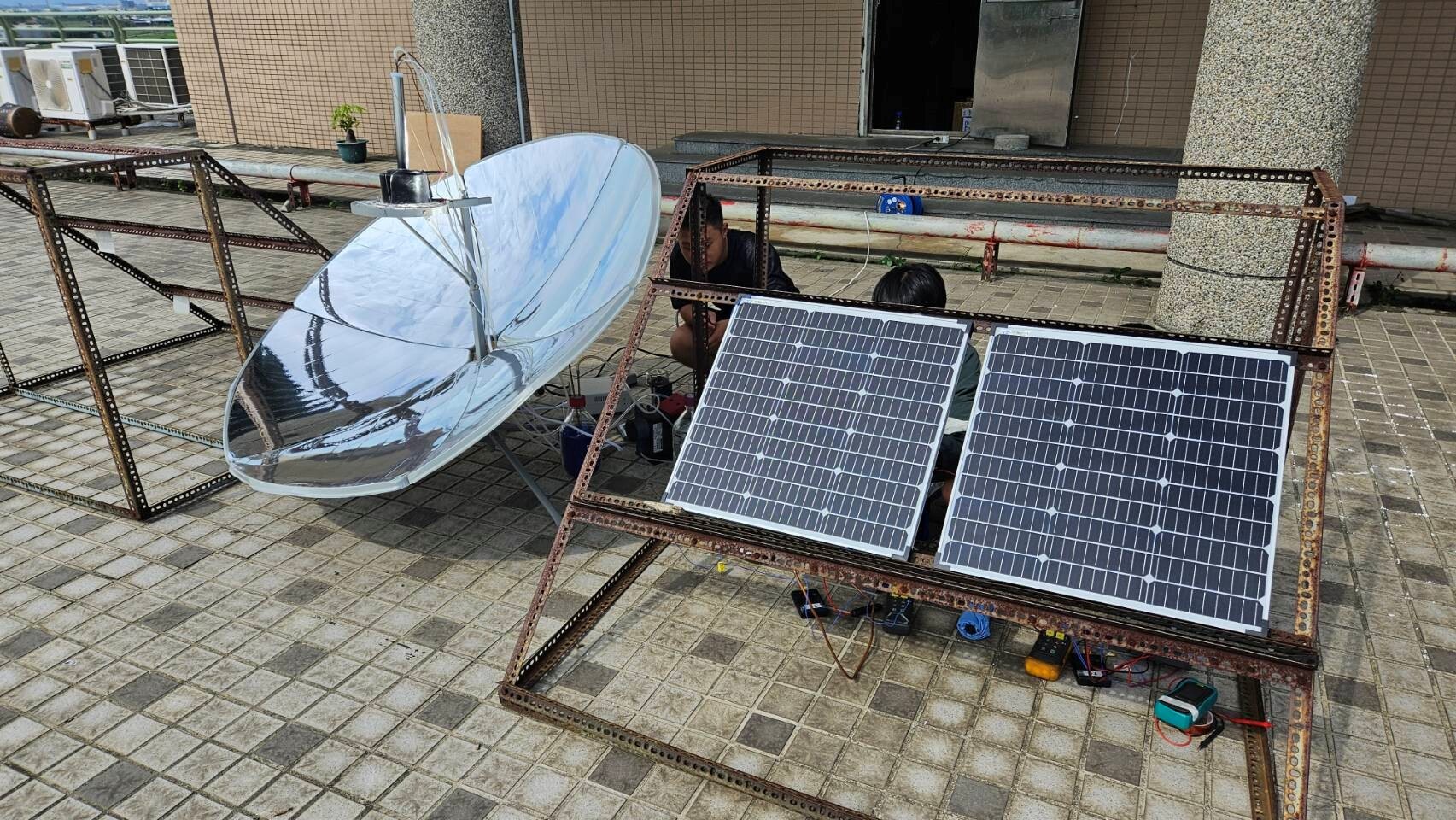
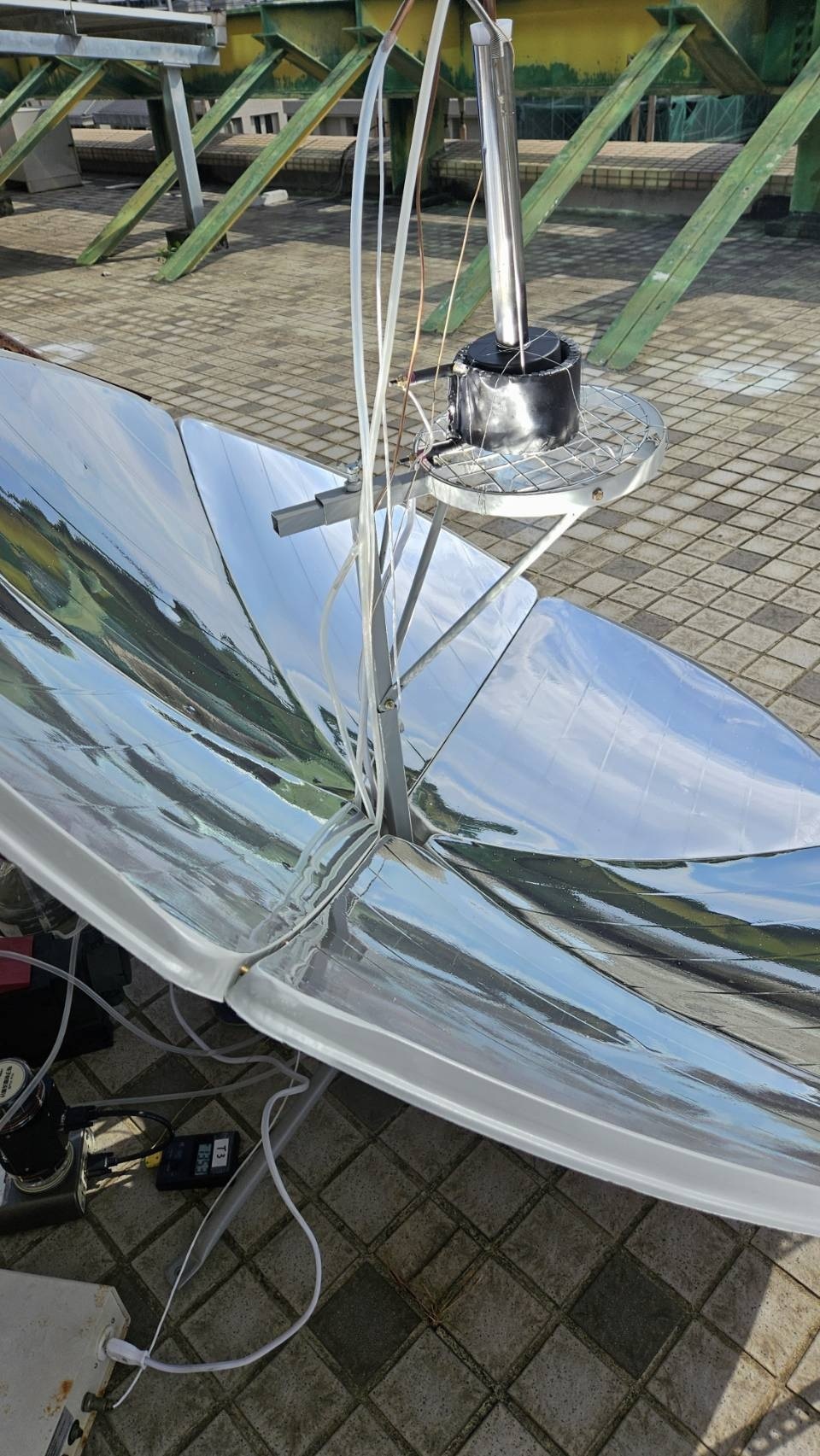
This project is founded on the core concept of “transforming waste heat into a resource.” It integrates three key technologies - photovoltaic (PV) power generation, dish-type concentrated solar power (Dish CSP), and methanol steam reforming (MSR) - to construct an off-grid, multi-energy complementary system. To address the contradiction between the efficiency loss of PV modules at elevated temperatures and the high-temperature demand of MSR reactions, the research team proposes an innovative concept of integrated resource reutilization. In this design, low-grade waste heat from PV panels is used to preheat the reactant feed, while the dish-type solar concentrator supplies the high-temperature heat required for the reforming reaction. In addition, a dual energy storage configuration combining batteries and hydrogen ensures continuous system operation during nighttime and under extreme weather conditions. The overall architecture establishes a triple symbiosis of heat, electricity, and material flows, thereby enhancing both energy autonomy and system resilience.
Experimental outcomes demonstrate that this system effectively reduces PV panel temperature, increases power output, and stably produces high-purity hydrogen, achieving continuous 72-hour energy operation under off-grid conditions. Compared with the conventional “PV + water electrolysis” hydrogen production route, the proposed system exhibits higher overall energy conversion efficiency and leverages the existing methanol supply chain to achieve lower cost and greater practicality. These findings not only verify the feasibility of integrated off-grid energy systems but also provide a resilient and sustainable energy solution for remote islands, disaster-prevention facilities, and military bases.
Application Examples
The research team integrates multidisciplinary expertise across chemical engineering, renewable energy systems, and thermal–electrical integration. With extensive experience in catalyst design, solar-thermal utilization, and energy system modeling, the team possesses strong capabilities in developing and validating hybrid energy technologies. The members have previously conducted research on methanol steam reforming, solar concentration systems, and off-grid power generation, enabling precise thermodynamic and kinetic optimization. In this project, the team combines innovative system integration with experimental verification, employing advanced control, monitoring, and safety mechanisms. Supported by solid academic backgrounds and engineering practice, the team demonstrates exceptional competence in transforming theoretical concepts into practical, scalable energy solutions suitable for rural and off-grid applications.
Future development will focus on advancing off-grid autonomous energy systems and low-carbon hydrogen technologies, including modular energy stations, rural green infrastructure, and optimized hydrogen storage and transport solutions. The team aims to further enhance innovative applications integrating heat, electricity, and hydrogen, establishing a model that bridges academic research and industrial deployment, and contributing to national renewable energy transition and regional energy resilience.
Related Links
None
Patent Name and Number
None
Industry-Academia / Tech Transfer Partner
None
Honors and Awards
None
Technical Contact
Vivian Lee, Administrative Assistant
National University of Kaohsiung
Tel: +886 7-5916639
Email: vivianlee@nuk.edu.tw