Kaohsiung Medical University / Prof. Chun-Wang Wei
Pain Points Solved
Conventional Trough Level interpretation has limited accuracy and cannot promptly reflect individual patient variability.
Physicians face heavy clinical workloads and lack decision-support tools that respect clinical autonomy while providing precise and personalized recommendations.
Technology Introduction
This method utilizes AI to verify high-risk drug dosages, respecting physicians’ decisions while providing personalized recommendations. Using vancomycin as an example, the technique increases treatment accuracy from 28.42% to 84.50% by incorporating a Trough Level partitioning approach and a clinical feedback mechanism. By reducing healthcare costs and shortening hospitalization duration, it facilitates precision medicine and enhances patient safety, making it suitable for various healthcare systems. Furthermore, regular calibration ensures ongoing optimization and promotes the broader adoption of precision medicine.

Figure1. Innovative Trough Level Method.
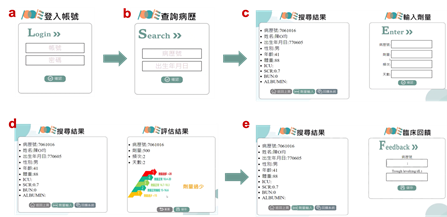
Figure 2. Drug Dosage Assessment system.
Application Examples
Treatment accuracy is improved from 28.42% to 84.50%, effectively reducing the incidence of adverse effects and drug toxicity.
The approach helps shorten hospitalization duration and reduce overall healthcare costs, making it suitable for large healthcare systems to promote and implement precision medicine.
Related Links
None
Patent Name and Number
TW I853646
US 18/457,681
Industry-Academia / Tech Transfer Partner
None
Honors and Awards
None
Technical Contact
Mr. Hung, Assistant Manager
Kaohsiung Medical University
Tel: +886 7-3121101 ext. 2360
Email: R121084@kmu.edu.tw