Kaohsiung Medical University / Prof. Wen-Hsien Ho
Pain Points Solved
This technology utilizes artificial intelligence and acoustic blood-flow analysis to provide rapid, non-invasive screening before dialysis. With a diagnostic accuracy of 95%, it enables early intervention, reduces emergency procedures, and lowers healthcare burdens.
Technology Introduction
End-stage renal disease (ESRD) requires routine pathological examination to ensure dialysis fistula function. By measuring and recording arteriovenous blood flow before hemodialysis, quantifying minute features in blood flow sounds, extracting their acoustic characteristics, comparing them with normal blood flow sounds, and applying artificial intelligence methods, we then obtain the degree of vascular stenosis. The accuracy of the deep learning model reaches 95%. The device can be applied in the following areas:
1. Dialysis room for kidney dialysis patients.
2. Long-term care facilities for kidney dialysis patients.
3. Home care for kidney dialysis patients.
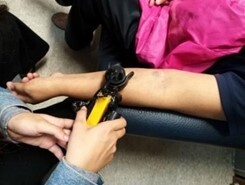
Figure 1. Schematic Diagram of Blood Flow Sound Recording Positions
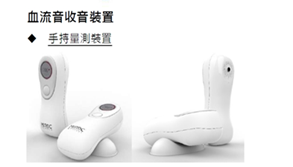
Figure 2. Schematic Diagram of Blood Flow Sound Recording Positions
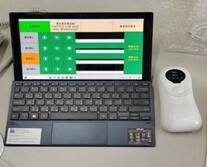
Figure 3. User Interface of the Arteriovenous Fistula Monitoring System
Application Examples
It is also suitable for long-term care facilities and home-care settings, providing continuous fistula monitoring for ESRD patients and supporting remote healthcare management to reduce the risk of unexpected vascular occlusion.
Related Links
None
Patent Name and Number
TW I815608
Industry-Academia / Tech Transfer Partner
None
Honors and Awards
None
Technical Contact
Mr. Hung, Assistant Manager
Kaohsiung Medical University
Tel: +886 7-3121101 ext. 2360
Email: R121084@kmu.edu.tw