
I-SHOU University / Prof.Rong-Ching Wu
Pain Points Solved
Attention-deficit/hyperactivity disorder (ADHD) is common among children. Conventional assessments rely heavily on observations, questionnaires, and clinical judgment, which may be influenced by subjective interpretation, short observation periods, and unfamiliar testing environments. These limitations can contribute to missed or inaccurate assessments and increase the workload of healthcare professionals. This technology addresses these challenges through remote, contactless motion sensing in everyday settings. It records measurable movement-related signals while allowing individuals to maintain their usual routines. The resulting objective information can support professional evaluation, reduce dependence on specialized testing locations, and facilitate preliminary screening in homes or schools.
Technology Introduction
This assistive ADHD diagnostic system uses contactless sensing to capture movement-related information. A transmitting antenna sends a sensing wave toward the subject, while a receiving antenna collects the reflected or scattered echo. The system analyzes the frequency shift between the transmitted wave and the echo. A connected processing module converts detected shifts into a signal whose intensity is proportional to the subject’s movement amplitude. This approach enables remote observation without disrupting normal daily activities. The device can be monitored conveniently using a smartphone, reducing operational demands. By providing objective motion measurements over a flexible observation period, the technology is intended to support clinical assessment and may also be used for preliminary screening in home and school environments.
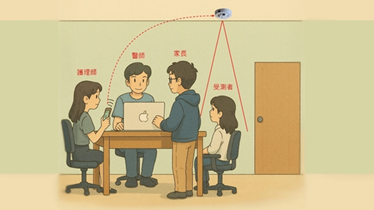
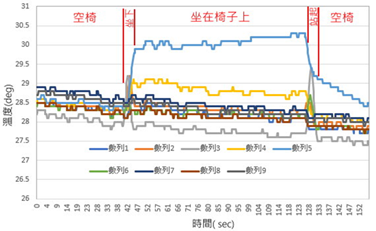
▲Caption: System illustration: contactless movement sensing in an everyday environment and an example signal chart reflecting changes in the subject’s activity.
Application Examples
For home use, the sensing device may be installed in a suitable location to observe a child’s movements during ordinary daily activities without requiring wearable equipment or deliberate test participation. Parents can monitor device operation through a smartphone. In school settings, teachers may assist with preliminary observation and provide movement-related information for subsequent professional assessment. Flexible monitoring periods may reduce distortions caused by intentional behavior during short tests. Potential applications include home-based preliminary screening, school-based observation, and support for remote healthcare services. The collected motion signals are intended as supplementary assessment information and do not replace a comprehensive diagnosis by qualified healthcare professionals.
Related Links
None
Patent Name and Number
中華民國發明專利證號:I927914。
Industry-Academia / Tech Transfer Partner
None
Honors and Awards
None
Technical Contact
Prof.Rong-Ching Wu
I-SHOU University
Tel: +886 7-6577711 ext. 6636
Email: rcwu@isu.edu.tw