﹤Biotech & Biomed Innovation﹥TCH-3511 for FAP via β-glucuronidase Inhibition
Kaohsiung Medical University / Prof. Chih-Hua Tseng
Pain Points Solved
- Currently, there is no FDA-approved safe medication for the treatment of familial adenomatous polyposis (FAP), resulting in limited clinical treatment options.
- Conventional inhibitors of intestinal β-glucuronidase (βG) lack selectivity and may cause intestinal side effects.
- Chemotherapy is often associated with intestinal damage and gut microbiota imbalance, negatively impacting patients’ quality of life and therapeutic outcomes.
- Therefore, there is an urgent need to develop safe and selective therapeutic and preventive agents that do not disrupt beneficial gut microbiota
Technology Introduction
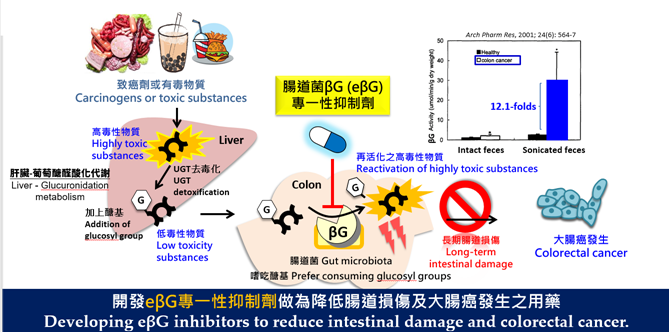
In 2023, the United States reported over 150,000 new colorectal cancer cases, while Taiwan has the highest incidence rate in Asia. According to WHO estimates, from 2020 to 2040, global colorectal cancer cases will exceed 3 million annually, and by 2040, approximately 1.6 million additional deaths will be attributed to the disease. However, there is currently no FDA-approved safe medication for familial adenomatous polyposis (FAP). Therefore, developing drugs for colorectal cancer treatment and prevention is an urgent priority. This patent's core technology focuses on developing a selective eβG inhibitor to reduce intestinal damage and lower the risk of colorectal cancer.
Advantages of TCH-3511:
1. Selectively inhibits intestinal bacterial eβG without affecting human βG
2. High inhibitory efficiency with low toxicity
3. Does not impact probiotic growth
4. Does not interfere with chemotherapy efficacy
Application Examples
- Treatment for FAP patients: TCH-3511 reduces intestinal toxicity and delays polyp formation and malignant transformation.
- Colorectal cancer prevention: Use in high-risk populations inhibits intestinal bacterial eβG activity and reduces intestinal damage.
- Adjuvant to chemotherapy: When used in combination with chemotherapy, it protects the intestinal barrier, reduces side effects, and does not interfere with therapeutic efficacy.
- Clinical potential: It has the potential to become the world’s first selective eβG inhibitor for colorectal cancer prevention and treatment strategies.
Related Links
None
Patent Name and Number
TW I614251
US 11,135,206、US 11,052,072
JP 6607962
EP 3302060、EP 3662751
CN 4641308、CN 4751135
Industry-Academia / Tech Transfer Partner
None
Honors and Awards
None
Technical Contact
Mr. Hung, Assistant Manager
Kaohsiung Medical University
Tel: +886 7-3121101 ext. 2360
Email: R121084@kmu.edu.tw