
﹤Biotech & Biomed Innovation﹥One-Step Arming of Bispecific Antibodies for Treating Cancer
Kaohsiung Medical University / Prof. Tian-Lu Cheng
Pain Points Solved
- Conventional chemical conjugation methods for PEG nanomedicines often lead to antibody heterogeneity, compromising clinical stability and reproducibility.
- Covalent chemical conjugation requires multiple modification steps, which is time-consuming and may alter the biological activity of the drug.
- There is a lack of a simple and rapid platform to confer tumor-specific targeting capability to PEG-based nanocarriers.
- Traditional PEG modification can induce immune responses, such as the generation of anti-PEG antibodies, thereby reducing therapeutic efficacy.
Technology Introduction
Methoxy polyethylene glycol (mPEG) nanomedicines (e.g., liposomes, micelles) are emerging as the third generation of innovative drugs. However, traditional chemical modifications for attaching antibodies to PEG-NPs often result in heterogeneity, limiting clinical applications. We developed dual-function antibodies (BsAbs) that simultaneously recognize polyethylene glycol (PEG) and tumor antigens. the anti-PEG domain can non-covalently bind to the methoxy end of various PEG-NPs. This method overcomes the heterogeneity of chemical conjugation while enhancing tumor-targeting specificity, effectively targeting tumors overexpressing HER2, EGFR, and CD20. We established a PEG×HER-expressing CHO-S cell line and demonstrated that PEG-NPs (e.g., Lipo-DOX) modified with dual-function antibodies using a one-step process maintained stability and tumor specificity. This approach significantly improved tumor drug accumulation and therapeutic efficacy, even against doxorubicin and Herceptin-resistant tumors, with no severe toxicity observed in animal models.
Key Advantages:
1. One-Step Modification: Streamlined process for antibody conjugation. 2. Tumor-Specific Targeting: Enhances targeting accuracy of PEG-NPs. 3. Low Immunogenicity: Minimizes immune response risks. 4. Antigen Versatility. It also supports targeting emerging tumor antigens, offering vast potential for future cancer treatments.
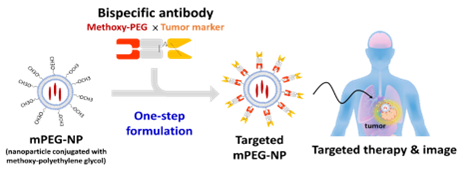
Figure 1. Humanized Bispecific Antibody (mPEG × Tumor Marker) Enhances Tumor Specificity and Improves Nanodrug Efficacy Against Drug-Resistant Breast Cancer
Application Examples
- Using a one-step mixing strategy with dual-function antibodies, anti-mPEG Fab is fused with tumor-targeting scFv, enabling one-step modification of PEG nanomedicines (e.g., Lipo-DOX).
- The modified nanomedicines exhibit tumor-targeting capability toward tumors overexpressing HER2, EGFR, and CD20, significantly enhancing intratumoral drug accumulation and therapeutic efficacy.
- In mouse models, the platform demonstrated strong therapeutic efficacy even against drug-resistant tumors, with no significant toxicity observed.
- This technology has high industrial applicability, enabling rapid customization of PEG-based nanomedicines targeting a wide range of tumor antigens.
Related Links
None
Patent Name and Number
TW I560201、TW I653244、TW I677506、TW I742283
US 10,188,742、US 11,040,111、US 11,369,690、US 16/615,822
CN 3713675、CN 5525981
EP 3126398、EP 3725812
JP 6447887
KR 10-1971770
SG 11201606791Y
Industry-Academia / Tech Transfer Partner
None
Honors and Awards
None
Technical Contact
Mr. Hung, Assistant Manager
Kaohsiung Medical University
Tel: +886 7-3121101 ext. 2360
Email: R121084@kmu.edu.tw