﹤Biotech & Biomed Innovation﹥Rapid Screening Method for Antibiotic Treatment of Unknown Infections
Kaohsiung Medical University / Prof. Wei-Peng Li
Pain Points Solved
- Conventional infection detection methods require 3–5 days, which may cause patients to miss the optimal treatment window.
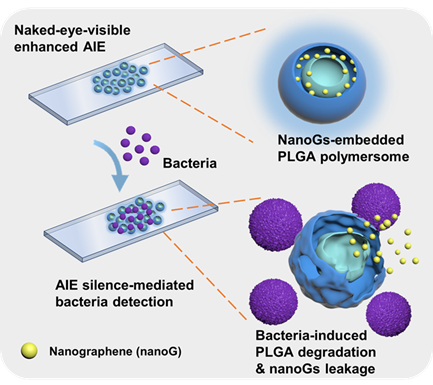
- This technology employs biodegradable nanovesicles to encapsulate nanographene, enabling detection to be completed within one hour and significantly reducing diagnostic waiting time.
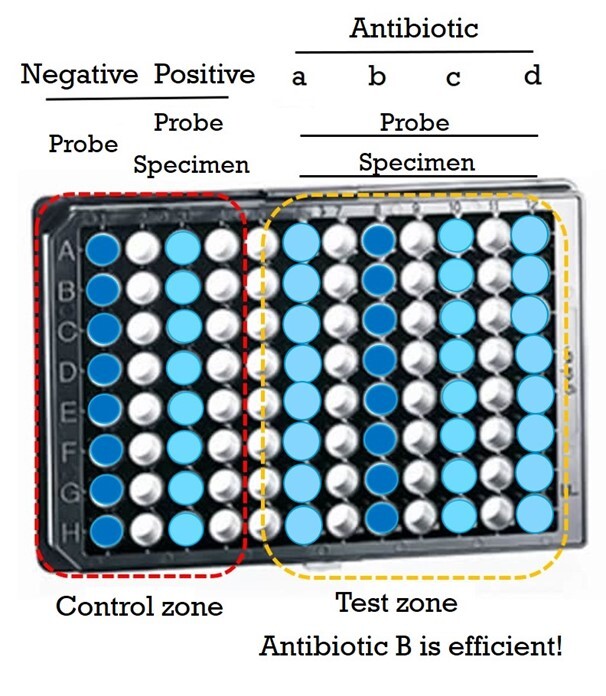
- By correlating changes in fluorescence intensity with bacterial concentration, this method provides real-time and accurate infection assessment and supports timely antibiotic selection.
Technology Introduction
Detection of infectious symptoms takes approximately 3–5 days. This delay may result in missing the golden treatment window, leading to the infection worsening. This technology is the first to utilize biodegradable nanovesicles to encapsulate nanographene, forcing it into an aggregated state that exhibits enhanced fluorescence visible to the naked eye. Additionally, since live bacteria can rapidly degrade these nanovesicles, the encapsulated nanographene is released, transitioning from an aggregated to a non-aggregated state. This transition results in a reduction of fluorescence intensity that is proportional to the bacterial concentration. This technology can be applied in pathogen rapid screening tests, precision medicine, and in vitro diagnostic platforms. Although this method does not identify the bacterial species, it enables the selection of the most suitable antibiotic within just one hour, allowing for timely and effective infection management.
Application Examples
- Clinical rapid screening: Applied to the rapid detection of infectious pathogens, assisting physicians in assessing infection severity at an early stage.
- Precision medicine: Enables the selection of the most effective antibiotic based on bacterial activity, thereby reducing the risk of antimicrobial resistance.
- In vitro diagnostic platforms: Can be integrated into microfluidic chips or smart diagnostic devices for rapid screening in home-based or clinical settings.
Related Links
None
Patent Name and Number
TW 114122628
PCT/CN2025/101350
Industry-Academia / Tech Transfer Partner
None
Honors and Awards
None
Technical Contact
Mr. Hung, Assistant Manager
Kaohsiung Medical University
Tel: +886 7-3121101 ext. 2360
Email: R121084@kmu.edu.tw