
﹤Biotech & Biomed Innovation﹥Liver Disease Mouse Model: Preparation & Application
Kaohsiung Medical University / Prof. Hsu,Shih-Hsien.
Pain Points Solved
- Liver cancer is often diagnosed at an advanced stage, and there is a lack of effective mechanistic models to predict the progression of fatty liver disease to liver cancer, limiting early intervention and treatment efficacy.
-
The carcinogenic mechanisms of non-alcoholic fatty liver disease (NAFLD) remain unclear. Existing animal models require long development periods and show inconsistent disease progression, making it difficult to accurately replicate human disease progression.
-
The role of environmental pollutants and inflammatory factors in inducing ISX expression and accelerating liver cancer progression is not fully understood, and there is a lack of experimental platforms to validate key molecular mechanisms and therapeutic targets.
Technology Introduction
Liver cancer ranks sixth in global incidence and third in mortality, primarily due to late diagnosis. In Taiwan, it is associated with viral infections, environmental factors, and diet, while in Western countries, high-calorie diets contribute to fatty liver disease (NAFLD), increasing the risk of liver cancer. The Westernization of Taiwan’s diet has also raised the prevalence of fatty liver disease.
NAFLD can progress to liver cancer, but its underlying mechanisms remain unclear. The ISX gene, induced by inflammatory factors such as IL-6, is highly expressed in liver cancer cells, promoting cancer cell proliferation and affecting prognosis. Environmental pollutants further induce ISX expression, worsening liver cancer.
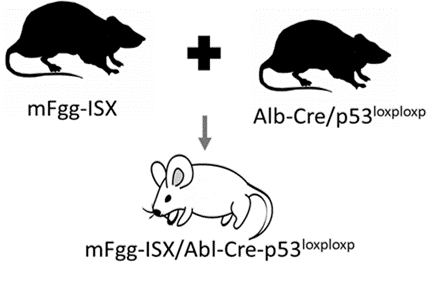
Researchers have developed a liver disease mouse model by crossing liver-specific ISX transgenic mice with p53 knockout mice, which rapidly develop liver disease under a high-fat diet. This model shortens the onset of fatty liver, mimics human liver disease, and facilitates research on liver cancer mechanisms, biomarker discovery, and drug development.
Application Examples
- Establish a mouse model that rapidly induces liver disease under a high-fat diet to elucidate the key mechanisms driving the progression from fatty liver to liver cancer.
-
Serve as a research platform for ISX-related oncogenic pathways to identify early diagnostic biomarkers.
-
Apply the model to evaluate the efficacy and safety of anti-inflammatory, anti-tumor, or metabolism-regulating drugs, thereby accelerating new drug development.
-
Assess the impact of environmental pollutants or dietary factors on liver cancer progression, providing scientific evidence to support public health policies and preventive strategies.
Related Links
None
Patent Name and Number
TW I723562
US 11,800,857
Industry-Academia / Tech Transfer Partner
None
Honors and Awards
None
Technical Contact
Mr. Hung, Assistant Manager
Kaohsiung Medical University
Tel: +886 7-3121101 ext. 2360
Email: R121084@kmu.edu.tw