﹤Biotech & Biomed Innovation﹥Treatment for Hepatitis B Virus Infection
Kaohsiung Medical University / Prof. Chia-ho Shih
Pain Points Solved
- Overcoming the limitations of current HBV therapies: Existing treatments mainly suppress viral replication but rarely eliminate infected cells. By targeting CRM1-mediated nuclear export, this technology disrupts a critical stage of the HBV life cycle, reducing viral DNA production and enhancing the potential for a cure.
-
Addressing the shortage of novel antiviral targets: Long-term disease management remains necessary with current therapies. Our findings identify CRM1 as a critical regulator of HBV intracellular transport, providing a novel therapeutic target and new opportunities for antiviral drug development.
Technology Introduction
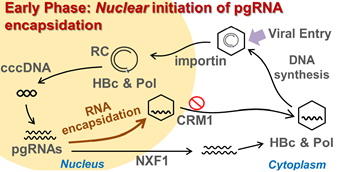
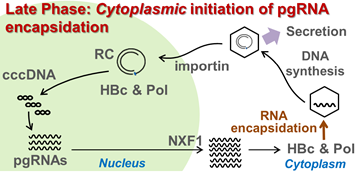
Our research identifies CRM1 as a key mechanism for exporting hepatitis B virus (HBV) core particles carrying RNA from the nucleus. These particles contain an NESCRM1 signal that directs their export. Mutations in NESCRM1 weaken interactions with CRM1 and nucleoporin 358, leading to HBV core particle accumulation in the nucleus, reduced cytoplasmic RNA viruses, and nearly undetectable viral DNA.
We propose that HBV pregenomic RNA encapsidation may start in the nucleus, while DNA genome maturation mainly occurs in the cytoplasm. Targeting CRM1 could disrupt HBV intracellular transport, inhibiting viral replication. This approach offers a potentially curative treatment for chronic HBV by using CRM1 inhibitors to regenerate uninfected liver cells. Additionally, this technology can be applied in drug development, transport systems, and biomedical materials, providing new opportunities for antiviral therapies.
Application Examples
-
Chronic Hepatitis B treatment and cure strategy: CRM1 inhibitors can block the export of HBV RNA-containing core particles from the nucleus, suppressing viral replication and DNA maturation while promoting regeneration of uninfected hepatocytes as a potentially curative therapy.
-
Drug delivery and biomedical material development: Insights into NESCRM1 signaling and nuclear transport mechanisms can be applied to create advanced intracellular delivery systems for RNA therapeutics, targeted drug carriers, and innovative biomedical materials.
Related Links
None
Patent Name and Number
TW I857509
US 18/842,040
Industry-Academia / Tech Transfer Partner
None
Honors and Awards
None
Technical Contact
Mr. Hung, Assistant Manager
Kaohsiung Medical University
Tel: +886 7-3121101 ext. 2360
Email: R121084@kmu.edu.tw