﹤AI、Biotech & Biomed Innovation﹥Exercise Training Detection System with Psychological Stress Assessment
National Pingtung University of Science and Technology / Assistant Professor Level Researcher Tsai-Chiao Wang
Pain Points Solved
Current exercise devices or smart biofeedback systems mostly focus on physiological data monitoring, such as heart rate, blood oxygen, and muscle activity, while neglecting the impact of psychological stress on exercise effectiveness and safety. The development of this work can effectively: Enhance exercise training safety: Automatically reduce exercise intensity or change modes when the user's psychological stress is too high to prevent sports injuries caused by stiffness or decreased attention due to stress. Strengthen rehabilitation training effects: For users undergoing exercise rehabilitation, high psychological stress may affect muscle relaxation and neural reconstruction; this technology ensures the stability of physical and mental states during rehabilitation, improving the success rate. Personalized exercise adaptability: Dynamically adjust exercise modes according to different users' psychological stress responses, allowing them to train in the best physical and mental state, enhancing exercise performance and the formation of long-term exercise habits.
Technology Introduction
This project develops a smart exercise mode adjustment system based on psychological stress assessment. The system integrates eye-tracking, posture projection, and voice feedback technologies, and provides a personalized, immediately adaptive exercise experience through a virtual environment (VE). Through pupil change sensing technology, it monitors psychological stress in real-time and dynamically adjusts exercise intensity and rhythm to ensure users exercise safely within a controllable stress range, reducing anxiety and improving exercise compliance. This technology uses AI psychological stress interpretation as its core, integrating non-contact physiological sensing indicators such as pupil changes and heart rate variability (HRV) to establish a personalized stress-exercise response model. The system can analyze psychological stress in real-time and automatically adjust exercise intensity, rhythm, and mode, providing voice and visual feedback to assist training, and switching modes when stress exceeds limits. With a modular architecture, it can be applied to fitness equipment, rehabilitation platforms, and corporate health promotion, demonstrating high industrialization and international market potential.
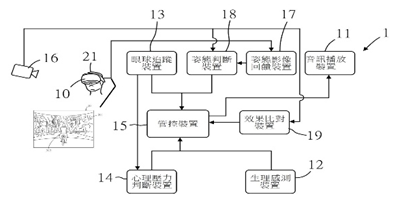
Figere 1. Technology System Architecture Diagram

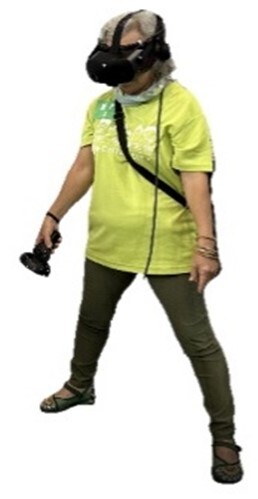
Figere 2. R&D Result Application Simulation Diagram (Applicable to Naked Eye, Head-Mounted)
Application Examples
None
Related Links
None
Patent Name and Number
None
Industry-Academia / Tech Transfer Partner
None
Honors and Awards
Taiwan Innotech Expo Invention Competition
National Pingtung University of Science and Technology Teacher R&D Results Competition Gold Medal
Technical Contact
Joan Li, Project Manager
National Pingtung University of Science and Technology
Tel: +886 8-7703202 ext. 6571
Email: joanli@mail.npust.edu.tw