
﹤AI﹥Portable AI Real-time Weather Forecast System
National Pingtung University of Science and Technology / Prof. Hsu Tzu-Kuei
Pain Points Solved
1. Limitations of Traditional Forecasting: Existing commercial weather forecasting software typically only provides 3-hour interval forecasts and lacks real-time data assimilation and AI self-correction capabilities. This leads to insufficient accuracy during extreme weather (e.g., rainstorms, typhoons, heatwaves) or sudden changes, failing to meet the needs of industries highly dependent on real-time weather, such as shipping, military, aviation, and fisheries.
2. Technological Innovation & Breakthroughs:
- AI Deep Learning Hybrid Model (Hybrid ML): Combines multi-source data (NWW3 wave models, BUOY observations) for feature fusion. Can receive satellite and weather station data in real-time for automatic correction and retraining. Field-tested error is only about 0.39 meters, far superior to the traditional regression model error (0.51 meters).
- Real-time Multi-period Forecasting Capability: Provides short-term forecasts updated every 10 minutes and 6-day long-term predictions with 90% accuracy. Can perform high-resolution forecasting for specific areas (e.g., shipping lanes, fishing grounds, beaches, airports).
- Low-cost Portable Equipment Design: Features plug-and-play, low power consumption, and offline operation capabilities. Can generate forecast data instantly in remote areas or maritime environments.
- Real-time Self-correction Algorithm: The model possesses a self-learning mechanism that automatically optimizes parameters based on environmental changes, improving stability and accuracy.
3. Technology Value & Social Impact:
|
Field |
Problem Solved |
Value Delivered |
|---|---|---|
|
Military Application |
Assists the Navy in monitoring regional weather, hydrology, and wave height changes; supports warship deployment and personnel safety. |
Enhances the accuracy of defense decision-making and mission success rates. |
|
Fishery & Shipping |
Predicts safe departure windows and sea conditions. |
Reduces risks and operational costs; improves fishing efficiency. |
|
Aviation & Airport Management |
Predicts airflow along flight paths, visibility, and precipitation probability. |
Improves flight safety; reduces flight delays and fuel consumption. |
|
Hotels & Tourism Industry |
Provides customized weather services and extreme weather alerts. |
Enhances customer experience and brand added value. |
|
Public Safety & Disaster Prevention |
Provides real-time alerts for rainstorms, typhoons, or heatwaves. |
Strengthens disaster response capabilities and emergency decision-making. |
Technology Introduction
The "Portable AI Real-time Weather Forecast System" integrates satellite weather data, weather station hydrological data, deep learning algorithms, and mobile hardware devices to achieve "High-precision weather and sea state prediction with automatic updates every 10 minutes and real-time self-correction."
The core of the system is the AI Hybrid Deep Neural Network Model developed by the team. It can receive data from satellites, buoys, and ground observations in real-time and automatically correct mathematical calculation modules, achieving a prediction accuracy of over 90%. Compared to traditional weather software that can only predict weather within 3 hours, this technology can provide real-time weather and hydrological forecasts within 1 hour and extend to wind speed and wave height predictions for the next 6 days.
This system has developed into a third-generation prototype with a portable design. It can be used on naval vessels, fishing boats, yachts, at airports, or hotel sites, and supports cloud data synchronization and real-time visualization. The hardware integrates low-power computing modules and high-sensitivity weather sensors, possessing advantages of high mobility and low cost. It can be mass-produced and promoted to military and civilian fields in the future.
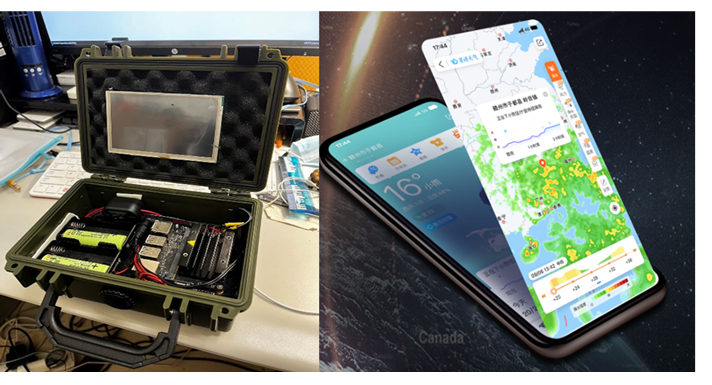
Figure 1. Technology commercialization prototype
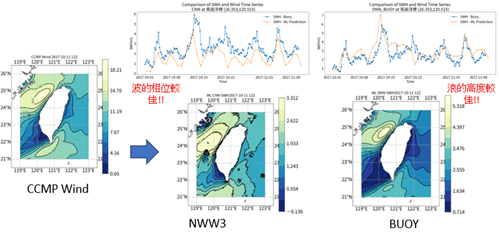
Figure 2. NWW3 and Buoy data learning model calibration
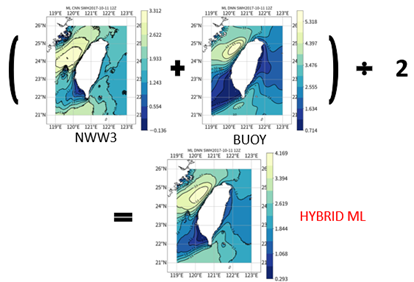
Figure 3. New Hybrid Data Learning Model (NWW3+BUOY)
Application Examples
Case 1: Navy Tactical Weather Auxiliary System
- Field: Naval Atmospheric Oceanography Office, Ministry of National Defense.
- *Content: Combines satellite data and buoy station observations with AI models to provide regional weather forecasts and wave height analysis updated every 10 minutes.
- Results: Assisted the Navy in actual combat tests in the waters southeast of Taiwan with an accuracy rate of 90%, significantly improving warship navigation and supply scheduling efficiency.
Case 2: Civilian Fishery and Yacht Industry Cooperation
- Target: Wan Kuo Shipping (International Shipping), Argo Yachts, Fishermen's Association.
- Function: Provides navigation safety forecasts, wave height predictions, and wind field analysis to predict safe times for going to sea.
- Benefits: Reduces ship damage and operational delays caused by bad weather, and improves the accuracy of insurance claims.
Case 3: Japan Riversoft Travel Platform Cooperation Trial
- Content: Signed a technology introduction agreement with Riversoft, Japan's largest travel platform, to provide "Real-time Weather Subscription Service" and "High Temperature Heatwave/Rainstorm Warning System" for hotels and resorts.
- Benefits:
- Hotels can plan summer escape facilities and adjust activities in advance.
- Tourists can receive location-based weather warning notifications in real-time.
- Enhances travel experience and safety.
Related Links
None
Patent Name and Number
None
Industry-Academia / Tech Transfer Partner
None
Honors and Awards
None
Technical Contact
Joan Li, Project Manager
National Pingtung University of Science and Technology
Tel: +886 8-7703202 ext. 6571
Email: joanli@mail.npust.edu.tw