﹤ESG and Circular Economy﹥Recycling Cocoa Pod Husk Ash as Green Catalyst Activator for Production of Porous Negative Carbon Materials
National Pingtung University of Science and Technology / Professor Tsai Wen-Tien
Pain Points Solved
Rice is the largest agricultural product in Taiwan, with an annual production of about 1.4 million tons. Behind this figure lies an agricultural waste crisis. After the husks are removed and the rice reaches the dining table, approximately 300,000 to 350,000 tons of removed rice husks (RH) are generated annually with nowhere to go.
Since its main composition is lignin fiber (over 80%) and it contains silica ash (15-20%), domestic reuse of its raw form is mainly for lower-level applications such as bedding, compost, animal feed, and firewood/auxiliary fuel. However, its truly valuable reuse lies in utilizing its lignin fiber components to produce carbon materials.
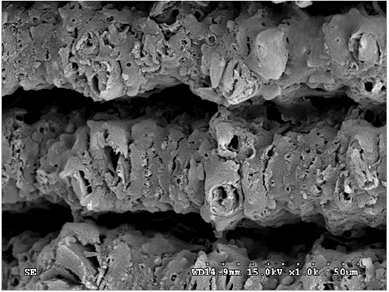
In view of the fact that the pore characteristics of current domestic rice husk biochar are not significant, the purpose of this creative work is to use rice husks and transform them into high-porosity carbon materials using green production principles. In addition to enhancing the value of crop residues, applying them to industrial and livelihood industries also features the benefits of increasing carbon sinks, reducing carbon emissions, and achieving sustainable resource circulation.
On the other hand, many tropical fruit trees, such as cocoa, are planted in southern Taiwan. However, the development of this agricultural industry generates a large amount of Cocoa Pod Husks (CPH). Although they can be used as feed, fertilizer, fuel, or carved into toys and decorations, most current treatment/disposal methods involve on-site abandonment. Since the ash of this biomass waste contains significant potassium components, this creative work further utilizes chemical activation principles to use cocoa pod husk ash as a green catalyst, cleanly producing high-porosity negative carbon materials from rice husks.
Technology Introduction
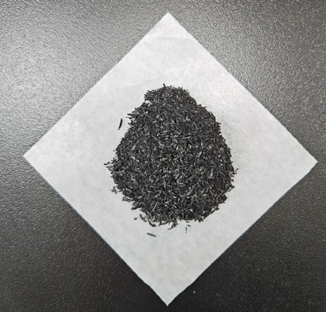
In view of the fact that cocoa pod husk ash is rich in potassium salts, this innovative work recycles it as a green catalyst (chemical activator) for the clean production of porous negative carbon materials; the lignocellulosic raw material used is rice husk, a major domestic agricultural waste.
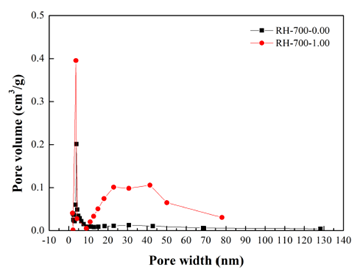
Under appropriate pyrolysis process conditions, high-mesoporosity (BET specific surface area > 600 m2/g) rice husk charcoal products can be produced. This is far superior to rice husk charcoal products without impregnated ash and current commercial rice husk charcoal products.
Application Examples
1. General Applications or Development Fields:
Includes decolorizing refining agents, natural food coloring, adsorbents, solid fuels, soil amendments, animal feed additives, building materials, etc.
2. Special/High-Value Applications or Development Fields:
Includes carbon materials for energy storage electrodes (supercapacitors/fuel cells), antidotes (gas masks, poison antidotes), adsorbents for energy storage/greenhouse gases (hydrogen, methane, carbon dioxide), and gastrointestinal (flatulence) relief agents, etc.
Related Links
None
Patent Name and Number
1. Invention Patent No. I881403: "Method for Producing Potassium-Rich Organic Materials from Biomass Waste"
2. Invention Patent No. I855769: "Biochar Prepared from Cocoa Pod Husks and Method of Preparation"
Industry-Academia / Tech Transfer Partner
Industry-Academia: 威翰環保工業公司
Tech Transfer: 盛祥農化科技有限公司
Honors and Awards
NPUST 2024 Faculty R&D Results Competition - Award for Excellent Work
Technical Contact
Joan Li, Project Manager
National Pingtung University of Science and Technology
Tel: +886 8-7703202 ext. 6571
Email: joanli@mail.npust.edu.tw