﹤Biotech & Biomed Innovation、AI﹥Intelligent X-ray Imaging System
Kaohsiung Medical University / Prof. Ming-Chung Chou
Pain Points Solved
- Traditional X-ray imaging relies heavily on the individual experience of radiographers to adjust exposure parameters, resulting in inconsistent parameter settings across operators and unstable image quality and radiation dose control.
- Existing automatic exposure control (AEC) systems are prone to detection errors when the examinee is improperly positioned or has internal metallic implants, leading to an average increase of approximately 20% in radiation dose and an elevated cancer risk.
- Conventional systems are unable to automatically and dynamically adjust optimal X-ray imaging parameters based on individual differences such as height, weight, and actual body thickness.
Technology Introduction
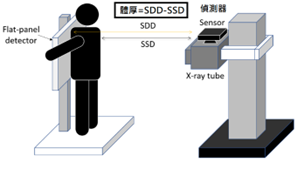
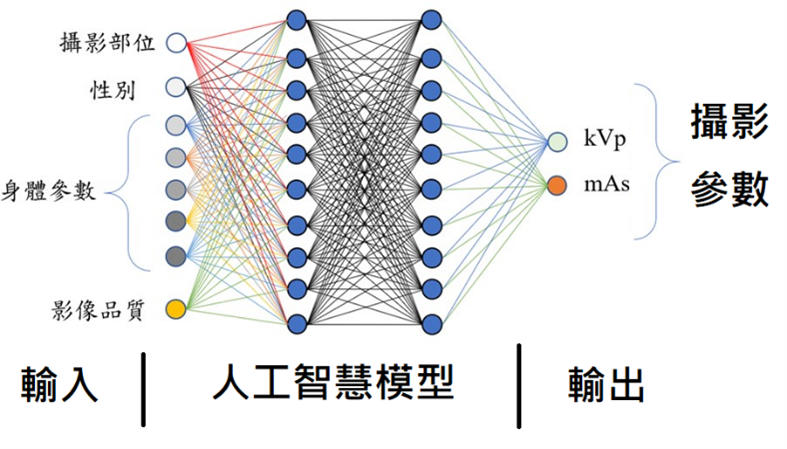
Traditional X-ray imaging requires experienced radiographers to adjust the optimal imaging parameters. These parameters allow the examinee to obtain sufficient image diagnostic quality with the least radiation dose, while avoiding excessive radiation absorption and increased risk of cancer. However, our research team has found that although current X-ray imaging systems use automatic exposure control technology, incorrect detection can occur when the examinee is in a poor position or has internal metallic objects, resulting in an approximately 20% increase in radiation dose and cancer risk for the examinee. In order to obtain the best imaging parameters, our team has developed an artificial intelligence X-ray imaging system. This X-ray imaging system is equipped with a non-contact body thickness measurement device, which accurately measures body thickness. By inputting the examinee's height and weight, the built-in intelligent X-ray imaging system can output the optimal exposure parameters, thereby obtaining stable X-ray image quality and reducing unnecessary radiation-induced cancer risk.
Application Examples
- After hospitals adopt the AI-based X-ray imaging system, radiographers only need to input the examinee’s height and weight, and the system automatically calculates and outputs the optimal exposure parameters to ensure consistent image quality.
- In pediatric or geriatric imaging examinations, the system effectively reduces the risk of overexposure and enhances patient safety.
- When applied in health screening centers, the system ensures consistent image quality across different operators while reducing repeat examinations and unnecessary radiation exposure.
Related Links
None
Patent Name and Number
TW I825328、TW I782737
Industry-Academia / Tech Transfer Partner
None
Honors and Awards
22ed National Innovation Award-Academia & Research Innovation Award
Technical Contact
Mr. Hung, Assistant Manager
Kaohsiung Medical University
Tel: +886 7-3121101 ext. 2360
Email: R121084@kmu.edu.tw