
﹤Biotech & Biomed Innovation、AI﹥Automatic Blepharoptosis Detection System
Kaohsiung Medical University / Prof. Chung-Sheng Lai
Pain Points Solved
- Conventional blepharoptosis assessment relies heavily on manual observation and clinical experience, resulting in high subjectivity and poor inter-observer consistency.
- Traditional measurement procedures are time-consuming and inefficient, making it difficult to rapidly assess a large number of patients in clinical settings.
- Manual measurements are easily affected by lighting conditions, camera angles, and operator expertise, leading to limited accuracy and reproducibility.
- There is a lack of objective and quantifiable metrics to support reliable preoperative evaluation and postoperative comparison.
Technology Introduction
The Automated Blepharoptosis Detection System captures eye images using a fixed device and employs deep learning and image processing technology to automatically measure levator muscle function and the severity of ptosis, addressing the limitations of traditional methods that are subjective, time-consuming, and less accurate. The system utilizes an iris and sclera semantic segmentation model to mark eye structures, derive the iris center and radius, and calculate key parameters such as MRD1, MRD2, PFH, and PFL. Additionally, it integrates a double eyelid coordinate prediction model to automatically identify monolids or double eyelids and determine their coordinates, enhancing measurement precision. This system enables physicians to quickly assess ptosis severity, classify the condition, and formulate appropriate treatment strategies, providing a reliable basis for preoperative evaluation and postoperative follow-up. By overcoming the constraints of conventional assessments, this technology offers a rapid, objective, and highly accurate diagnostic tool that enhances clinical efficiency and healthcare quality.
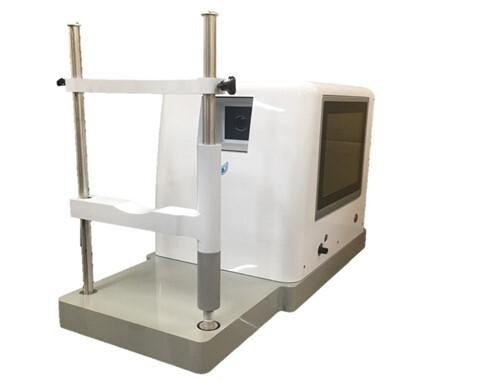
Figure 1. Prototype Device

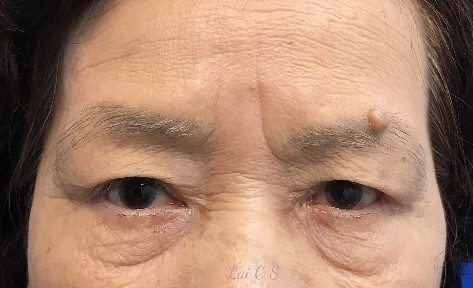
Figure 2. Preoperative and Postoperative Images of Severe Blepharoptosis
Application Examples
- Clinical Practice: In outpatient clinics, physicians can use the system to rapidly and automatically measure key parameters such as MRD1, MRD2, PFH, and PFL to assess the severity and classification of ptosis.
- Surgical Planning: The system supports surgical planning by assisting physicians in formulating appropriate strategies for levator muscle correction or double eyelid surgery.
- Postoperative Follow-up: Automated and standardized measurements enable objective comparison of preoperative and postoperative outcomes, providing reliable evaluation of treatment effectiveness.
- Research Applications: The system can serve as a data source for ophthalmic disease analysis and AI model training, advancing research and the development of intelligent healthcare solutions.
Related Links
Automatic Blepharoptosis Detection System
https://www.youtube.com/watch?v=al6bkIojkqE
Patent Name and Number
TW I673034
US 11,877,800
CN 6477230
Industry-Academia / Tech Transfer Partner
None
Honors and Awards
The 14th National Innovation Award – Clinical Innovation Award
Technical Contact
Mr. Hung, Assistant Manager
Kaohsiung Medical University
Tel: +886 7-3121101 ext. 2360
Email: R121084@kmu.edu.tw