
﹤Biotech & Biomed Innovation﹥Survival Probability Prediction Tool
Kaohsiung Medical University / Prof. Ming-Ju Tsai
Pain Points Solved
- Traditional APACHE and SOFA scoring systems are based on outdated statistical data, which no longer adequately reflect current clinical environments or the increasing diversity of critically ill patients.
- Existing scoring tools lack real-time and personalized prediction capabilities, limiting their effectiveness in supporting clinical decision-making and optimal allocation of healthcare resources.
- The traditional scoring process is complex and heavily dependent on manual interpretation, making it susceptible to subjective judgment and reducing the accuracy of prognosis assessment.
Technology Introduction
For assessing the prognosis of critically ill patients in intensive care units (ICUs), APACHE and SOFA scoring systems are commonly used to evaluate or predict ICU and hospital mortality rates. However, these scoring systems were developed decades ago, and the statistical data they are based on is now over 20 years old. With advances in clinical data collection, we now have access to a broader and more detailed range of data, alongside significantly improved machine analysis capabilities. As a result, traditional scoring systems are no longer sufficient to meet the demands of precise prediction and personalized healthcare. Therefore, our team has developed a survival probability prediction tool for critically ill patients, utilizing an AI algorithm model that leverages physiological, laboratory, and examination data from ICU patients to predict 30-day, 60-day, and 90-day survival rates. This device aims to provide valuable insights for prognosis assessment and healthcare resource allocation.
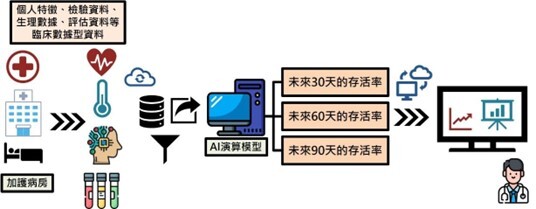
Figure 1. Critical Patient Survival Prediction Device Flowchart
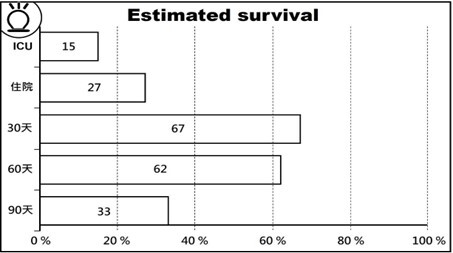
Figure 1. AI Model Survival Rate Assessment Diagram (30, 60, 90 Days)
Application Examples
- An AI-based survival prediction system is deployed in intensive care units to continuously analyze patients’ physiological data, laboratory results, and examination findings, enabling prediction of 30-, 60-, and 90-day survival probabilities.
- The system assists physicians in assessing the prognosis of critically ill patients, supporting disease progression monitoring, treatment strategy adjustments, and personalized care planning.
- The predictive outcomes serve as a reference for healthcare resource allocation, optimizing ICU bed management and nursing workforce planning to enhance overall care efficiency.
Related Links
None
Patent Name and Number
TW I875631
US 18/901,161
Industry-Academia / Tech Transfer Partner
None
Honors and Awards
None
Technical Contact
Mr. Hung, Assistant Manager
Kaohsiung Medical University
Tel: +886 7-3121101 ext. 2360
Email: R121084@kmu.edu.tw