
﹤Biotech & Biomed Innovation﹥Preparation method of molecularly imprinted film and its molecularly imprinted film, preparation method of molecular sensing electrode...
Preparation method of molecularly imprinted film and its molecularly imprinted film, preparation method of molecular sensing electrode and its molecular sensing electrode and molecular sensing system and purpose thereof obtaining a molecular imprinted film with high specificity and high accuracy by selecting a particular conductive polymer and its doping mole ratio in a specific range
National University of Kaohsiung / Prof. Hung-Yin Lin
Pain Points Solved
Existing hormone detection methods (such as Progesterone, Estradiol, and Testosterone) predominantly rely on invasive sampling and require biochemical analysis conducted via medical institutions/hospitals. This presents the following issues:
1. Cumbersome Testing Process: Requires blood draw or other invasive sampling procedures.
2. Long Turnaround Time: Samples must be sent to a laboratory for analysis.
3. User Inconvenience: Real-time monitoring is not possible, and there is a lack of at-home testing solutions.
Technology Introduction
This invention proposes a Molecularly Imprinted Polymer (MIP) sensing technology that combines a conductive polymer (Polyaniline doped with m-Aminobenzenesulfonic acid) with electrochemical detection. The core advantages include:
1. Non-Invasive Detection
Direct detection of urine samples, eliminating the need for blood drawing and significantly enhancing user convenience.
2. High Selectivity and Specificity
Utilizes Molecularly Imprinted Polymer (MIP) technology to create specific binding sites (cavities) within the polymer film, enabling precise recognition of hormone molecules (Progesterone, Estradiol, Testosterone).
3. Innovative Conductive Polymer Material
Uses Polyaniline doped with m-Aminobenzenesulfonic acid, which provides both excellent conductivity and chemical stability, making it ideal for electrochemical sensing.
4. Optimized Process Parameters
Doping molar ratio, imprinting time, and imprinting concentration have been experimentally verified to ensure optimal sensitivity and stability.
5. Rapid Testing and Portable Application
Paired with an electrochemical sensor, the detection time is short, making it suitable for integration into miniaturized devices or home testing systems.
6. Multi-Target Detection Capability
The same platform can be adapted to test for multiple hormones, significantly expanding its scope of application.
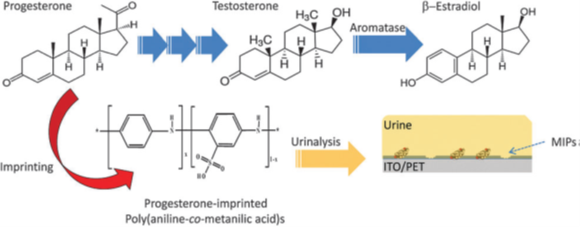
Figure1. Reaction Equation
Application Examples
1. Medical Testing and Diagnosis
Gynecology and Reproductive Medicine: Monitoring of ovulation, hormone testing for infertility treatment.
Endocrine Disease Testing: Auxiliary testing for hormone imbalance and thyroid-related diseases.
Clinical Testing Centers: Rapid initial screening to reduce laboratory workload.
2. Home Health Management
Personalized Hormone Monitoring: Tracking of the female ovulation cycle, monitoring of male testosterone levels.
Smart Wearable Device Integration: Pairing with mobile apps for real-time testing and cloud-based data analysis.
3. Sports Medicine and Fitness Industry
Athlete Hormone Monitoring: Tracking testosterone and estradiol levels to prevent overtraining or hormone imbalance.
Nutrition and Supplement Adjustment: Developing personalized diet and training plans based on hormonal status.
4. Pharmaceutical and Biotech Industry
Drug Efficacy Monitoring: Real-time tracking of hormone therapy medications.
Assistance in New Drug Development: Rapidly testing the drug's impact on hormone levels.
5. Smart Healthcare and Telemedicine
Remote Diagnosis Platform: Combining IoT and cloud technology to enable home testing and remote interpretation by physicians.
Health Big Data Analysis: Long-term hormone data collection for application in AI health prediction.
Related Links
None
Patent Name and Number
None
Industry-Academia / Tech Transfer Partner
None
Honors and Awards
None
Technical Contact
Vivian Lee, Administrative Assistant
National University of Kaohsiung
Tel: +886 7-5916639
Email: vivianlee@nuk.edu.tw